Common Symptoms of a Fracture
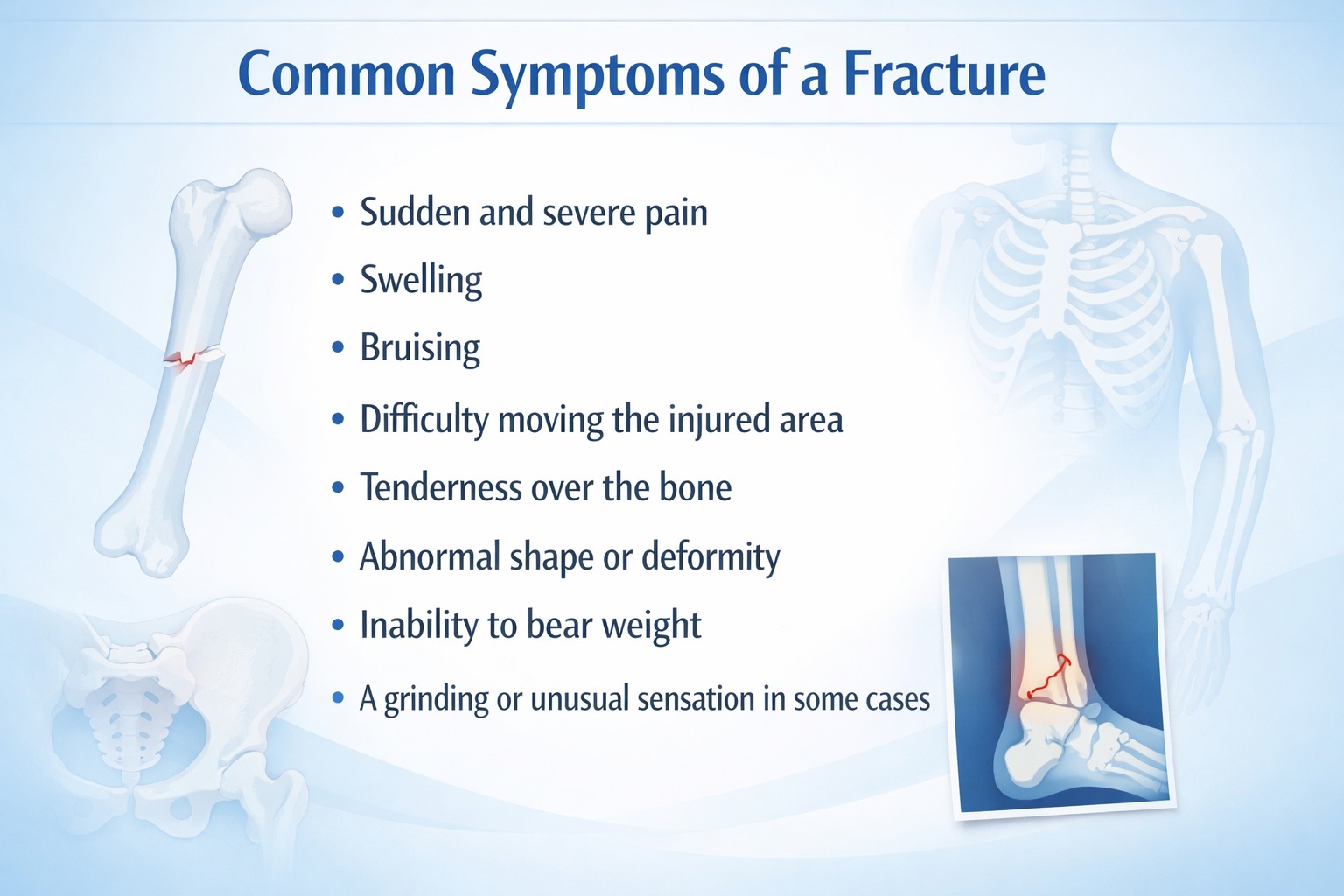
A fracture may cause:
- Sudden and severe pain
- Swelling
- Bruising
- Difficulty moving the injured area
- Tenderness over the bone
- Abnormal shape or deformity
- Inability to bear weight
- A grinding or unusual sensation in some cases
A visible deformity or bone protruding through the skin requires urgent medical attention.
Can You Tell the Difference at Home?
Not reliably.
A severe sprain can sometimes cause more pain and swelling than a minor fracture. Likewise, some fractures may initially appear less serious.
For this reason, doctors may recommend imaging such as an X-ray when a fracture is suspected. Depending on the injury, CT or MRI scans may also be needed to evaluate bones, ligaments, cartilage, or other soft tissues.
Avoid trying to force the injured joint into position or repeatedly testing its movement.
How Are Sprains Diagnosed?
A doctor usually begins with a physical examination. They may check:
- Location of pain
- Swelling and bruising
- Joint stability
- Range of motion
- Tenderness
- Ability to bear weight
Imaging may be recommended if there is concern about a fracture or significant soft-tissue injury.
Treatment is then planned according to the severity of the sprain.
How Are Fractures Diagnosed?
X-rays are commonly used to identify broken bones. In more complicated cases, a CT scan may provide a detailed view of the fracture.
MRI may be considered when doctors need to evaluate associated ligament, cartilage, tendon, or other soft-tissue injuries.
The treatment depends on factors such as the location and type of fracture, bone displacement, age, activity level, and overall health.
Treatment for a Sprain
Treatment depends on the severity of the ligament injury.
For many mild injuries, initial care may include:
- Resting the affected area
- Applying ice as advised
- Using compression when appropriate
- Elevating the injured limb
- Gradually returning to movement
- Physical therapy and strengthening exercises
A brace or other support may be recommended for certain injuries.
Severe ligament tears may require more advanced treatment. Your orthopedic specialist can determine whether conservative care or surgery is appropriate.
Treatment for a Fracture
Fracture treatment depends on the type and location of the break.
Possible treatments include:
- Splinting
- Casting
- Bracing
- Realignment of the bone
- Internal fixation
- Surgical repair
Some fractures can heal successfully with immobilization, while displaced or complicated fractures may require surgery.
Following medical instructions during recovery is important because returning to strenuous activity too soon can delay healing or increase the risk of complications.
When Should You See an Orthopedic Doctor?
Seek medical attention after an injury if you experience:
- Severe or worsening pain
- Significant swelling
- Visible deformity
- Inability to move the joint
- Inability to bear weight
- Numbness or tingling
- An open wound near the injury
- Pain that does not improve
Prompt assessment can help prevent complications and ensure that the correct treatment begins early.
Knee Injuries and Orthopedic Care
Knee injuries can involve bones, ligaments, cartilage, or other structures. While a sprain may improve with appropriate rehabilitation, severe damage or advanced joint disease may require specialized orthopedic care.
Patients with advanced arthritis who eventually require Knee Replacement surgery in Ghatkopar should undergo a detailed evaluation to determine whether joint replacement is appropriate.
For selected patients, Robotic Knee Replacement Surgery in Ghatkopar may be considered as an advanced approach to knee joint replacement. The suitability of robotic-assisted surgery depends on the patient’s condition and the surgeon’s assessment.
Choosing an experienced Knee Replacement Surgeon in Ghatkopar is important for evaluating the condition of the knee and discussing appropriate treatment options.
When Is Robotic Knee Replacement Considered?
Robotic-assisted knee replacement uses computer-assisted planning and technology to help the surgeon plan and perform the procedure with precision.
Patients considering this approach may consult a Robotic Knee Replacement Surgeon in Ghatkopar to understand whether they are suitable candidates.
It is important to remember that robotic assistance does not mean the procedure is completely performed by a robot. The surgeon remains responsible for planning and performing the operation.
Choosing the Right Knee Specialist
Patients with advanced knee arthritis, severe joint damage, or persistent knee pain may require assessment by a specialist.
A qualified Knee Joint Replacement Surgeon in Ghatkopar can evaluate symptoms, review imaging, and explain whether non-surgical management, joint replacement, or another treatment may be appropriate.
If you are researching treatment options, look for a Top Knee Replacement Surgeon in Ghatkopar based on qualifications, experience, appropriate surgical facilities, and patient-focused care rather than promotional claims alone.
Why Choose an Orthopedic Hospital?
After a significant injury, getting evaluated at an appropriate medical facility can make diagnosis and treatment easier.
An Orthopedic Hospital provides access to orthopedic evaluation and treatment for conditions affecting bones, joints, ligaments, muscles, and related structures.
Patients can discuss their injury with an orthopedic specialist and undergo appropriate examination and imaging when required.
Prevention Tips for Sprains and Fractures
Although not every injury can be prevented, several habits can reduce risk:
- Warm up before sports or exercise.
- Wear suitable footwear.
- Improve muscle strength and flexibility.
- Use protective equipment during contact sports.
- Keep floors and walking areas free from hazards.
- Learn proper lifting techniques.
- Increase exercise intensity gradually.
- Maintain good bone health through adequate nutrition and physical activity.
Older adults should also take steps to reduce fall risks at home.
Conclusion
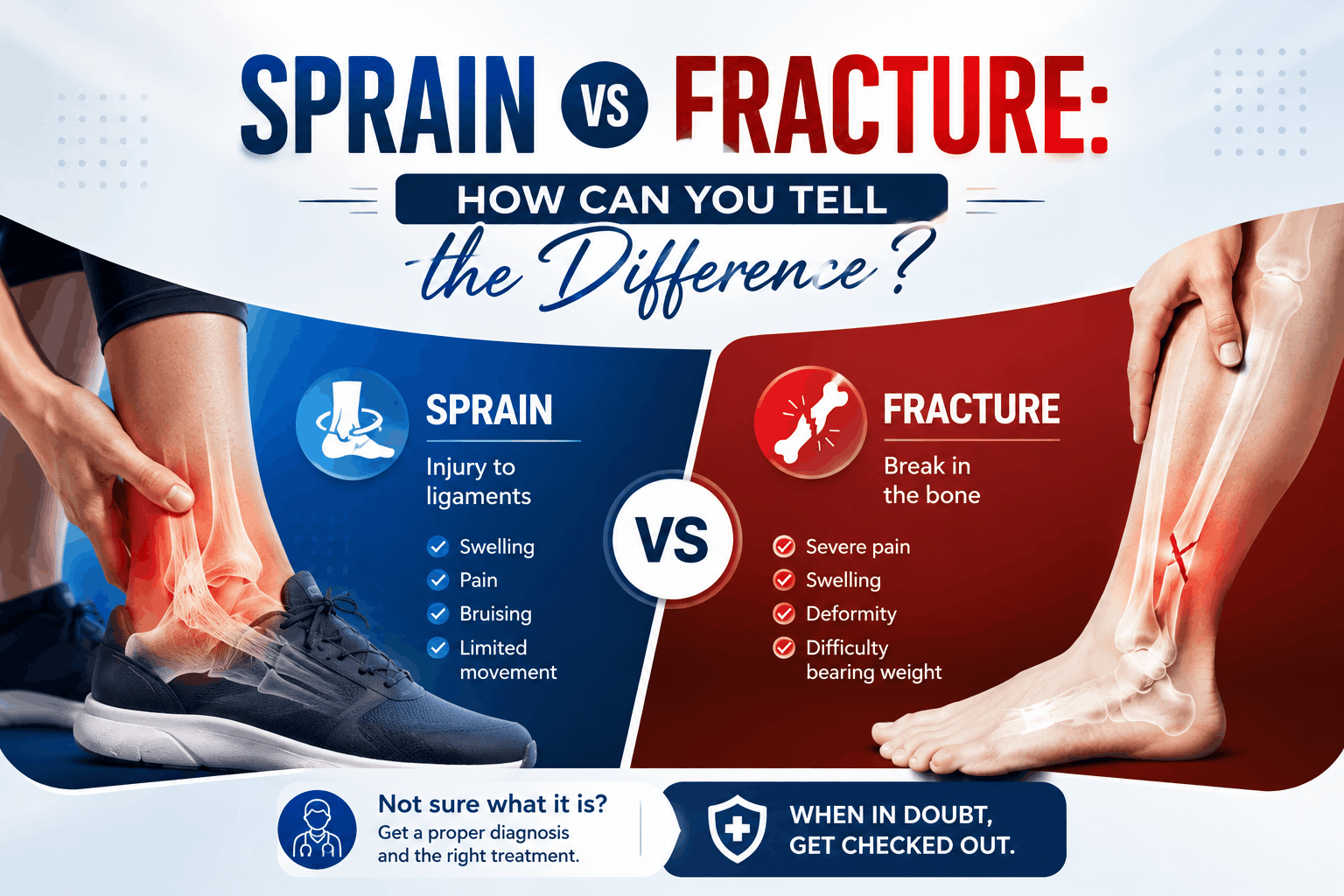
Sprain vs Fracture: How Can You Tell the Difference? The key difference is the tissue affected: a sprain involves a ligament, while a fracture involves a bone. However, symptoms can overlap, making it difficult to diagnose the injury without a proper medical examination.
If you experience severe pain, swelling, deformity, difficulty moving, or an inability to bear weight after an injury, seek timely evaluation from an Orthopedic Specialist Hospital Early diagnosis can help you receive the right treatment and support a safer recovery.
For orthopedic evaluation and treatment in Ghatkopar, consult a qualified orthopedic specialist at an Orthopedic Specialist Hospital and discuss your symptoms, diagnostic needs, and treatment options.