-
Posted By sapnahealthcare
-
-
Comments 0
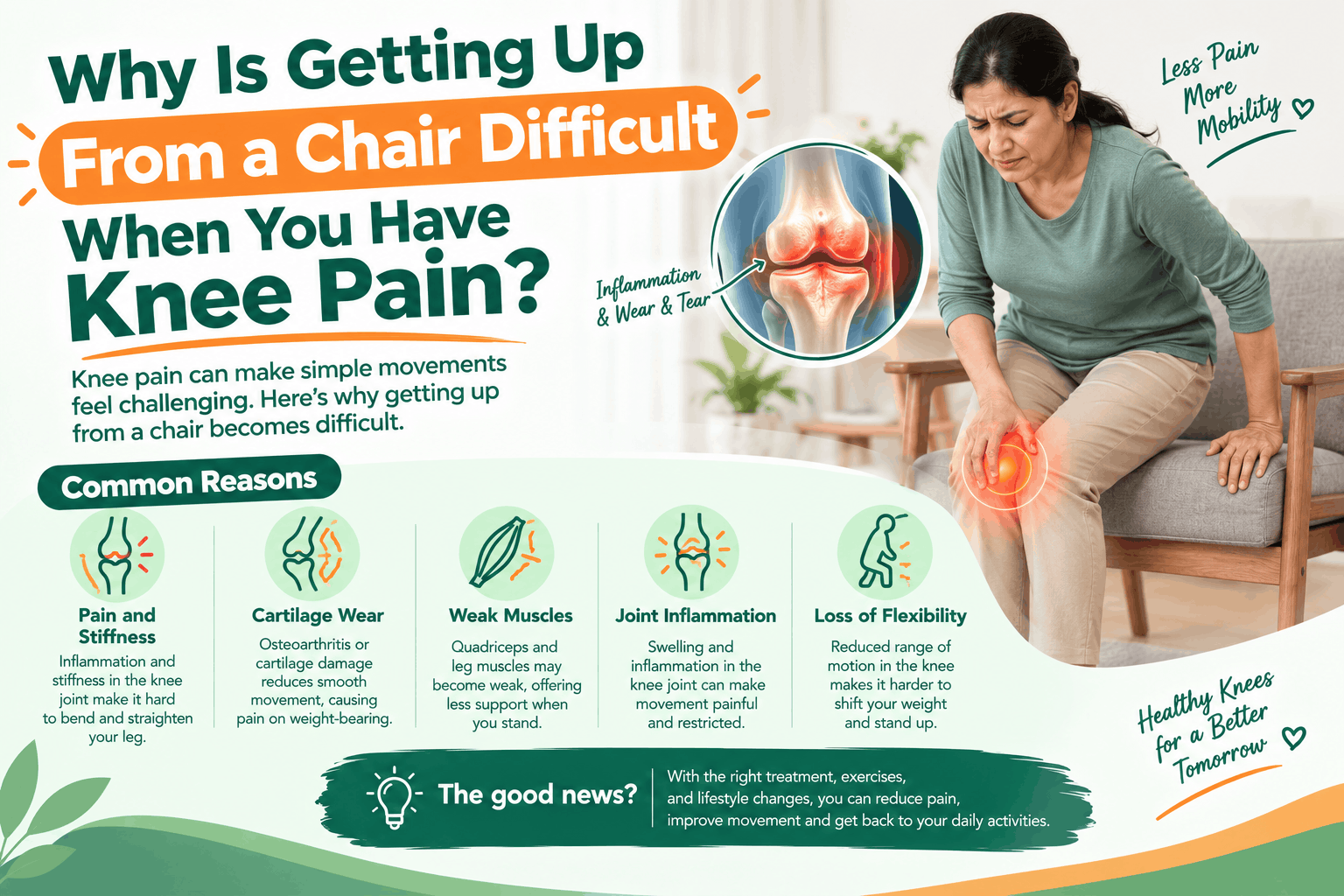
Why Is Getting Up From a Chair Difficult When You Have Knee Pain?
Getting up from a chair is a simple daily activity, but it can become painful and challenging when you have knee problems. You may experience stiffness, discomfort, weakness, or difficulty supporting your body. These symptoms can affect everyday activities such as standing, climbing stairs, and walking. Consulting the Best Spine Surgeon in Ghatkopar can help you understand whether spine-related issues contribute to mobility difficulties. Knee pain may also result from arthritis, cartilage damage, muscle weakness, age-related changes, or previous injuries. Identifying the underlying cause is important for choosing suitable treatment and improving mobility.
Why Does Knee Pain Make It Difficult to Stand Up From a Chair?
When you stand up from a chair, your knees bend and straighten while supporting your body weight. Your thigh muscles, knee joints, ligaments, and surrounding tissues work together to help you stand safely. If pain, inflammation, stiffness, or weakness affects these structures, standing may become uncomfortable. Consulting a top spine surgeon in Ghatkopar can help assess whether spinal problems contribute to mobility difficulties. You may need to push yourself up using your hands or avoid bending your knees fully. If symptoms persist, a specialist can help determine whether knee problems or spinal conditions require further evaluation, including whether spine surgery in Ghatkopar is relevant to your condition. Repeated pain should not be ignored, as identifying the underlying cause is essential for appropriate treatment.
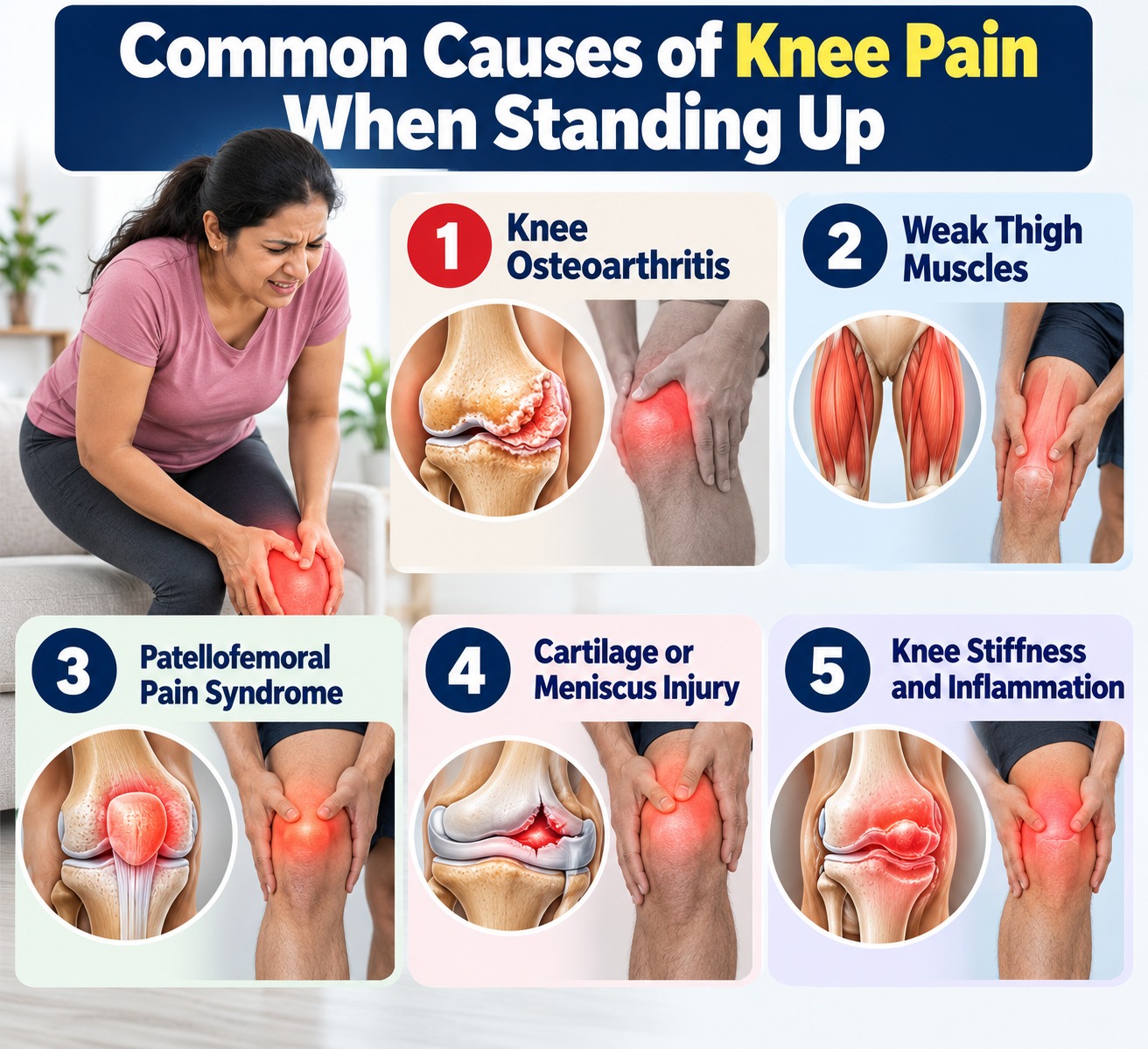
Common Causes of Knee Pain When Standing Up
Several conditions can make getting up from a chair difficult. Understanding these causes can help you recognise when professional evaluation may be necessary.
1. Knee Osteoarthritis
Osteoarthritis is a common cause of knee pain, particularly in older adults. It develops when the protective cartilage inside the knee joint gradually wears down, leading to changes in the joint.
Common symptoms include:
- Pain while standing up or sitting down.
- Stiffness after resting or sitting for a long time.
- Swelling around the knee.
- Difficulty walking or climbing stairs.
- Reduced flexibility and movement.
The pain may improve after you move around for a short time, although symptoms can vary. If discomfort persists, a doctor can assess your knee and recommend suitable treatment. For patients experiencing mobility issues related to spinal conditions, consulting a specialist for spine surgery in Ghatkopar may help determine the appropriate treatment options based on their diagnosis and overall health.
2. Weak Thigh Muscles
The quadriceps muscles at the front of your thighs play an important role in straightening your knees. When these muscles become weak, standing up from a chair requires more effort. Muscle weakness may develop because of inactivity, ageing, prolonged rest, or reduced physical activity due to previous knee pain. If you also experience back pain, numbness, or leg weakness, consulting a Spine Specialist Surgeon in Ghatkopar may help identify whether a spinal condition is contributing to your mobility difficulties. A physiotherapist can recommend appropriate strengthening exercises after assessing your condition.
3. Patellofemoral Pain Syndrome
The kneecap, also called the patella, moves along a groove in the thigh bone when you bend and straighten your knee. Problems with kneecap movement or increased stress around the joint can cause pain. Patellofemoral pain syndrome often causes discomfort at the front of the knee, especially when standing up after sitting, climbing stairs, or squatting. Treatment may include activity modification, physiotherapy, and strengthening exercises. If you also experience back pain, numbness, or leg weakness, consulting a specialist at Spine Surgery Hospitals in Ghatkopar may help determine whether a spinal condition is contributing to your mobility difficulties.
4. Cartilage or Meniscus Injury
The meniscus is a piece of cartilage that helps cushion and stabilise the knee joint. A tear can occur during sports, sudden twisting movements, or age-related changes. A meniscus injury may cause pain when bending or straightening the knee, along with swelling, catching, or difficulty putting weight on the affected leg. If your knee becomes locked or you cannot straighten it properly, seek prompt medical assessment. Consulting a Spine Doctor in Ghatkopar may also be helpful if you experience accompanying back pain, numbness, or leg weakness that could indicate a spinal problem affecting your mobility.
5. Knee Stiffness and Inflammation
Inflammation inside or around the knee joint can make movement painful. It may occur because of arthritis, an injury, or another joint condition. After sitting for a long period, the knee may feel stiff or difficult to move, making standing up and taking the first few steps uncomfortable. If the pain is accompanied by back discomfort, numbness, or leg weakness, consulting a Spine Specialist Doctor in Ghatkopar can help determine whether a spinal condition may also be affecting your mobility. Persistent swelling, warmth, redness, or worsening knee pain should be evaluated by a healthcare professional.
Why Is Standing Up Harder After Sitting for a Long Time?
Have you noticed that your knees hurt more when you get up after watching television, working at a desk, or travelling for several hours?
Prolonged sitting can make the knees feel stiff, particularly if you already have arthritis or another joint problem. During the transition from sitting to standing, your knees must support your body weight while your thigh and hip muscles help control the movement.
Low chairs can make this task more challenging because they require greater knee bending and more effort to stand.
To make standing easier, try using a firm chair with armrests and a suitable seat height. Move your feet underneath your body before standing, lean forward slightly, and use the armrests for support if needed. Avoid forcing your knees through painful movements.
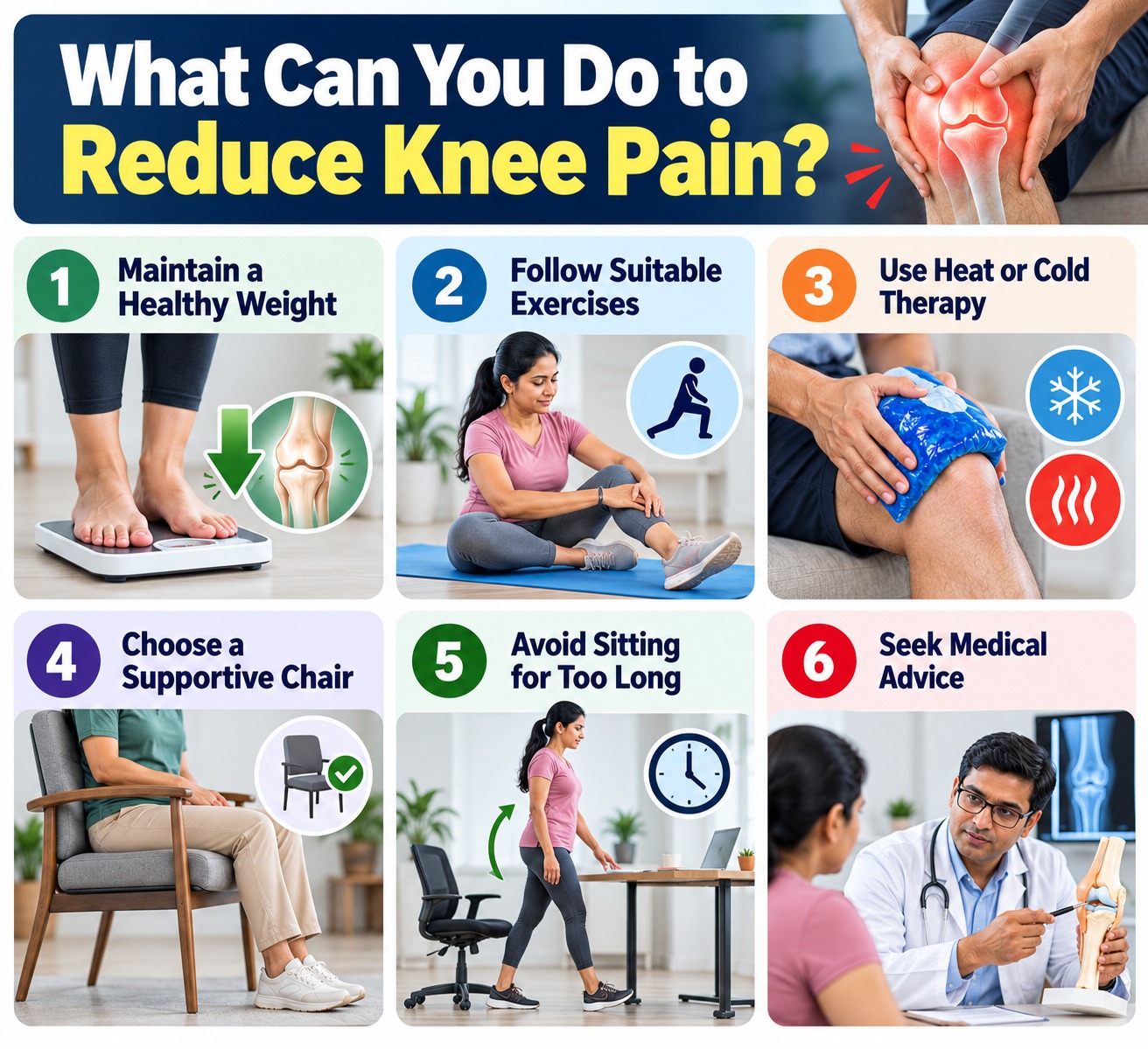
What Can You Do to Reduce Knee Pain?
The right approach depends on the cause and severity of your symptoms. Some practical measures may help reduce discomfort and make daily activities easier.
Maintain a Healthy Weight
Excess body weight can increase the load placed on your knee joints. Maintaining a healthy weight, where appropriate, may help reduce joint stress and improve mobility.
Follow Suitable Exercises
Gentle exercises can help maintain knee movement and strengthen the muscles supporting the joint. Depending on your condition, a physiotherapist may recommend quadriceps strengthening, gentle range-of-motion exercises, or low-impact activities.
Avoid starting strenuous exercises if your knee is swollen, severely painful, or injured.
Choose a Supportive Chair
A chair that is too low may force you to bend your knees more deeply. Choose a firm chair with a suitable height and armrests to make standing safer and easier.
Avoid Sitting for Too Long
If your symptoms allow, change positions regularly and take short movement breaks. Gentle movement may help reduce stiffness, but stop if an activity causes significant pain.
Seek Medical Advice
If knee pain continues, worsens, or interferes with daily activities, consult a qualified healthcare professional. Treatment may include physiotherapy, medication prescribed by a doctor, activity modification, or further investigations.
When Should You See a Knee Specialist?
Occasional discomfort may improve with appropriate rest and activity adjustments. However, persistent or worsening knee pain needs proper evaluation.
Consider seeking medical advice if you experience:
- Knee pain that continues for several weeks.
- Difficulty standing, walking, or climbing stairs.
- Repeated swelling or stiffness.
- A feeling that your knee is giving way.
- Pain that interferes with sleep or everyday activities.
- Reduced knee movement that affects your independence.
Seek urgent medical care if you cannot bear weight after an injury, your knee becomes severely swollen or deformed, or you develop a hot, red knee with fever.
A clinical examination can help identify the likely cause. Depending on your symptoms, your doctor may recommend an X-ray, other imaging tests, or additional investigations.
What Treatments Are Available for Persistent Knee Pain?
Treatment depends on the underlying condition, your activity level, medical history, and the extent of joint damage.
Non-surgical options may include physiotherapy, appropriate pain-relief medication, weight management, and changes to daily activities. Your doctor can help determine which options are suitable for you.
When severe knee osteoarthritis significantly affects walking and daily activities despite appropriate non-surgical treatment, knee replacement surgery may be considered.
Modern surgical approaches, including robotic-assisted knee replacement, may help surgeons plan and perform the procedure with technology-assisted precision. However, suitability and potential benefits vary from patient to patient.
If knee pain is affecting your quality of life, you can learn more about Knee Replacement Surgeon and discuss appropriate treatment options with a qualified specialist.
Choosing the Right Specialist for Knee Pain in Ghatkopar
If you live in Ghatkopar or nearby areas of Mumbai, consulting a qualified knee specialist can help you understand why standing up from a chair has become difficult.
Look for a doctor who can assess your symptoms, explain the available treatment options, and recommend a personalised management plan. Your evaluation may include checking your knee movement, muscle strength, walking pattern, and medical history.
If surgery is being considered, ask about the expected benefits, possible risks, recovery period, and alternatives. You can also explore this Top Knee Replacement Surgeon to find relevant information before arranging a consultation.
Conclusion
Getting up from a chair can become difficult when you have knee pain because the movement places stress on the knee joints and requires adequate muscle strength and flexibility. Conditions such as osteoarthritis, weak thigh muscles, kneecap-related pain, cartilage injuries, and inflammation may contribute to the problem.
Simple adjustments, suitable exercises, and timely medical advice can help improve comfort and mobility. If your knee pain persists or begins to interfere with daily activities, do not ignore it. A proper assessment can help identify the cause and guide you towards appropriate treatment.
Dr. Amin Shah can be a starting point for discussing your concerns and understanding the next steps for your condition. Seek care from a suitably qualified specialist based on your symptoms and individual medical needs.